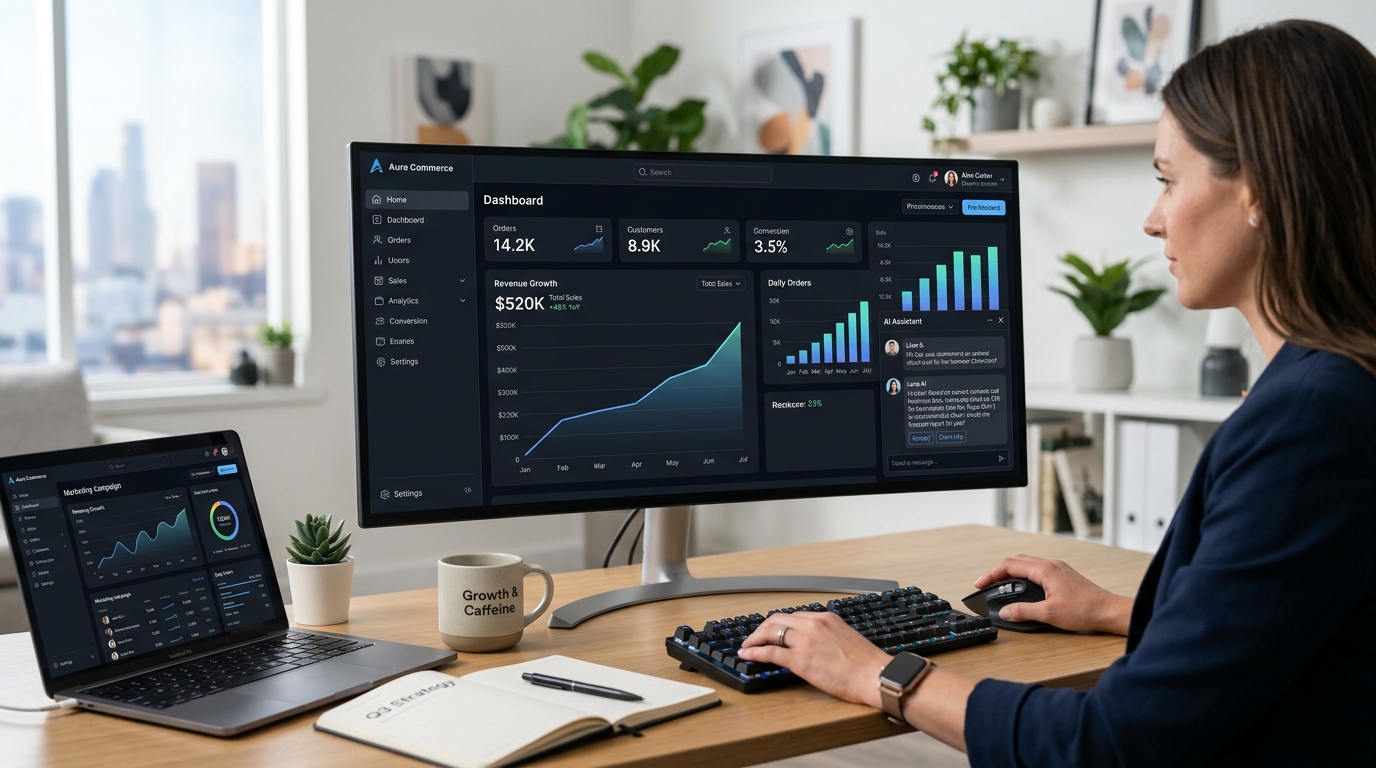
In today’s competitive digital marketplace, businesses are constantly searching for smarter ways to turn visitors into paying customers. One of the most effective solutions is learning How to Use AI Chatbots to Increase Sales Conversion Rates across websites, landing pages, ecommerce stores, and customer support channels.
AI chatbots have evolved far beyond simple scripted pop-ups. Modern chatbots can answer questions instantly, recommend products, qualify leads, recover abandoned carts, and guide customers toward purchase decisions in real time.
For brands targeting customers in the U.S., U.K., Canada, and Australia, chatbots can create faster buying experiences while reducing friction at every stage of the customer journey.
This guide explains exactly how to use AI chatbots to improve conversion rates, boost engagement, and increase revenue without overwhelming your support team.
Why AI Chatbots Improve Sales Conversion Rates
When customers hesitate, conversions drop. Common reasons include:
- Slow response times
- Unclear pricing
- Product confusion
- Lack of trust
- Too many choices
- Complicated checkout flows
AI chatbots help solve these issues by providing immediate assistance 24/7.
Key Benefits of AI Chatbots for Sales
| Benefit | Impact on Conversions |
| Instant replies | Reduces bounce rate |
| Personalized recommendations | Increases order value |
| Lead qualification | Improves sales efficiency |
| Cart reminders | Recovers lost sales |
| FAQ automation | Builds trust faster |
| Multilingual support | Expands audience reach |
Businesses that shorten response times often see stronger engagement and better conversion outcomes.
How AI Chatbots Work in the Sales Funnel
AI chatbots can support every stage of the buying journey.
1. Top of Funnel: Capture Interest
At the awareness stage, chatbot tools can greet visitors and guide them based on intent.
Examples:
- “Looking for the best laptop under $1,000?”
- “Need help comparing plans?”
- “Want a free demo?”
This creates engagement immediately instead of waiting for users to search manually.
2. Middle of Funnel: Remove Buying Objections
Potential buyers often hesitate because of:
- Shipping concerns
- Return policies
- Product compatibility
- Pricing questions
- Feature comparisons
A smart chatbot can answer these instantly, helping users move closer to checkout.
3. Bottom of Funnel: Close the Sale
At purchase stage, chatbots can:
- Apply discount codes
- Explain payment options
- Recommend bundles
- Assist with checkout errors
- Recover abandoned carts
This is where conversion gains are often highest.
Step-by-Step: How to Use AI Chatbots to Increase Sales Conversion Rates
Step 1: Identify High-Intent Pages
Do not place chatbots randomly everywhere.
Start with pages where buyers are closest to converting:
- Pricing pages
- Product pages
- Checkout pages
- Demo booking pages
- Comparison pages
- Landing pages from paid ads
These pages often generate the highest ROI.
Step 2: Use Personalized Welcome Messages
Generic messages like “Hello, how can I help?” are weak.
Instead, use intent-driven prompts such as:
- “Need help choosing the best plan?”
- “Compare our top-rated packages in 30 seconds.”
- “Want product recommendations based on your budget?”
This increases click-through rates and conversation starts.
Step 3: Recommend Products Based on Needs
AI chatbots can ask qualifying questions such as:
- What is your budget?
- Personal or business use?
- Preferred features?
- Delivery location?
Then suggest relevant products.
This works especially well for:
- SaaS pricing tools
- Ecommerce stores
- Insurance quote forms
- Education programs
- Subscription services
Step 4: Use Live Chat Handoff for Hot Leads
Not every customer wants automation only.
Best practice is hybrid support:
- Bot handles FAQs
- Human agent joins for high-value leads
For example:
If someone asks pricing for enterprise plans, route them to sales instantly.
This prevents losing premium customers.
Step 5: Recover Abandoned Carts
Many buyers leave during checkout.
AI chatbots can trigger messages like:
- “Need help finishing your order?”
- “Questions about delivery?”
- “Your items are still available.”
Even small reductions in abandonment can create major revenue gains.
Best AI Chatbot Use Cases for Different Industries
Ecommerce Stores
Use chatbots for:
- Product finder quizzes
- Order tracking
- Upsells
- Bundle recommendations
- Cart recovery
SaaS Companies
Use chatbots for:
- Demo scheduling
- Plan comparisons
- Trial signups
- Pricing FAQs
- Lead qualification
Service Businesses
Use chatbots for:
- Appointment booking
- Quote requests
- Availability checks
- Lead capture
Education & Courses
Use chatbots for:
- Course matching
- Enrollment support
- FAQs
- Payment options
Best AI Chatbot Features to Look For
When comparing chatbot platforms, prioritize these features:
| Feature | Why It Matters |
| AI natural language processing | Understands customer questions |
| CRM integration | Syncs leads automatically |
| Ecommerce integration | Tracks products and orders |
| Analytics dashboard | Measures conversion gains |
| Multilingual support | Reaches global users |
| Human handoff | Saves premium leads |
| Custom triggers | Improves timing |
Popular tools often vary in pricing, automation depth, and integrations.
Pros and Cons of AI Chatbots for Sales
Pros
- 24/7 customer support
- Faster lead response time
- Lower support workload
- Higher conversion potential
- Scalable during traffic spikes
- Better customer experience
Cons
- Poor setup can frustrate users
- Over-automation may feel impersonal
- Requires regular optimization
- Advanced tools may increase monthly cost
Common Mistakes That Hurt Conversion Rates
Avoid these errors:
1. Asking Too Many Questions
Long chatbot forms feel annoying. Keep flows short.
2. Hiding Human Support
Always offer an option to speak with a person.
3. Using Generic Responses
Train bots with real FAQs and customer language.
4. Triggering Too Early
Do not interrupt instantly. Use behavior-based timing.
5. Ignoring Mobile Users
Ensure chatbot windows are mobile-friendly and fast.
How to Measure Chatbot ROI
Track these KPIs:
- Conversion rate uplift
- Chat engagement rate
- Leads captured
- Average order value
- Cart recovery rate
- Cost per lead
- Bounce rate reduction
Run A/B tests comparing:
- With chatbot vs without chatbot
- Personalized greeting vs generic greeting
- Product quiz vs static recommendations
Optimization compounds over time.
Example Conversion Funnel With AI Chatbot
A visitor lands on your pricing page.
Without Chatbot:
- Reads page
- Feels unsure
- Leaves site
With Chatbot:
- Prompt appears: “Need help choosing the best plan?”
- Visitor asks question
- Bot compares plans
- Offers free trial
- User signs up
That small intervention can significantly improve conversions.
SEO and Paid Traffic Advantage
If you invest in SEO, Google Ads, Bing Ads, Meta Ads, or email campaigns, every extra conversion matters.
AI chatbots help maximize traffic value by turning more visitors into customers without increasing ad spend.
This makes them especially valuable for businesses paying for clicks in competitive markets.
Best Practices for U.S., U.K., Canada & Australia Markets
Customers in these regions often expect:
- Fast support
- Clear returns policies
- Transparent pricing
- Easy checkout
- Mobile responsiveness
- Trust signals
Your chatbot should reflect these expectations.
Use natural English variations and region-specific spelling when needed.
Call to Action
If your website gets traffic but sales feel lower than expected, adding an AI chatbot may be one of the fastest improvements you can test.
Start simple:
- Add chatbot to pricing or product pages
- Build top 10 FAQ responses
- Add product recommendation flow
- Measure conversions for 30 days
- Optimize weekly
Small improvements in conversion rate often create large business results.
Conclusion
Learning How to Use AI Chatbots to Increase Sales Conversion Rates is no longer optional for growth-focused brands. Buyers expect immediate answers, personalized experiences, and frictionless purchasing journeys.
When implemented correctly, AI chatbots can:
- Capture more leads
- Improve customer experience
- Recover lost sales
- Increase average order values
- Scale support efficiently
The best approach is to start with one high-intent page, monitor results, and improve continuously.
FAQ Section
1. Do AI chatbots really increase conversion rates?
Yes, many businesses use AI chatbots to reduce response delays, answer objections, and guide buyers toward checkout.
2. Where should I place a chatbot on my website?
Best locations include pricing pages, product pages, checkout pages, and lead generation landing pages.
3. Are AI chatbots expensive?
Pricing varies widely. Some tools offer free plans, while advanced platforms charge monthly fees based on usage and features.
4. Can AI chatbots replace human sales teams?
Not fully. They work best when handling repetitive questions and routing high-value leads to human staff.
5. What industries benefit most from AI chatbots?
Ecommerce, SaaS, healthcare scheduling, education, service businesses, and customer support teams often benefit.
6. How long does setup take?
Basic chatbot deployment can take hours, while advanced custom workflows may take days or weeks.
7. Do chatbots work on mobile devices?
Yes, modern chatbot platforms are designed for mobile websites and apps.